Salesforce vs HubSpot vs Zoho CRM vs Odoo: How to Choose the Right CRM

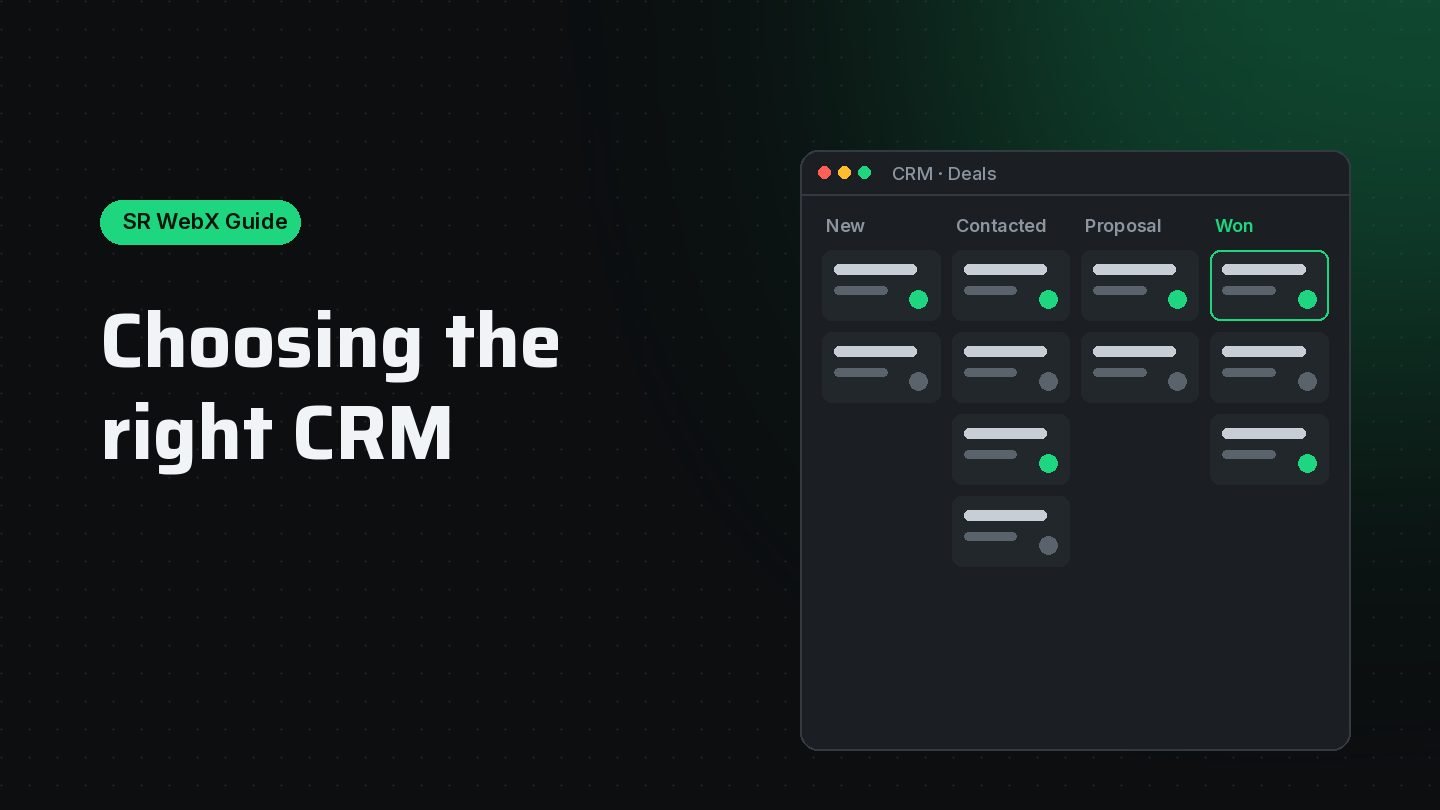
Choosing a CRM is less about finding the “best” platform and more about finding the one your team will actually use, at a cost that makes sense, connected to the tools you already rely on. Salesforce, HubSpot, Zoho CRM and Odoo are all capable systems. They suit different businesses.
Start with your process, not the software
Before comparing features, write down how a lead becomes a customer in your business today: where inquiries come from, who responds, what information is collected, how quotes are produced and what happens after the deal is won. The right CRM is the one that supports that journey with the least friction — and makes the weak points visible.
Salesforce
Salesforce is the most configurable of the four. It handles complex sales processes, large teams, territory management and strict permission models very well, and its ecosystem of apps and partners is enormous. The trade-offs are cost and complexity: licenses are relatively expensive and most organizations need an experienced administrator or partner to configure and maintain it properly.
Often a good fit for: mid-sized and larger sales teams, complex B2B pipelines and businesses with demanding reporting or governance needs.
HubSpot
HubSpot is known for ease of use and tight alignment between marketing and sales. Forms, email marketing, landing pages and the CRM share the same database, which makes attribution and lead handover simpler. Costs can rise quickly as you add seats and move up tiers, so model the price at the size you expect to be in two years.
Often a good fit for: inbound-led businesses where marketing generates most leads and both teams want one shared view.
Zoho CRM
Zoho CRM offers strong value and breadth. On its own it covers most SMB sales needs, and as part of Zoho One it connects to accounting, help desk, analytics, forms and custom apps. Custom logic can be added with Deluge, Zoho’s scripting language. The main challenge is choice: with so many apps and settings, businesses benefit from a clear implementation plan.
Often a good fit for: small and medium-sized businesses that want an affordable, integrated suite.
Odoo CRM
Odoo is an open-source business suite where CRM sits alongside sales, inventory, manufacturing and accounting. Its strength is the connected flow from opportunity to quote, delivery and invoice. Decisions about edition, hosting and custom modules matter, because they affect upgrade effort later.
Often a good fit for: businesses that want CRM and ERP in one system, particularly in distribution and manufacturing.
Questions to ask before you decide
How many people will use the CRM now and in two years? Which systems must it integrate with — website, email, accounting, e-commerce, support? Who will administer it after launch? What reports does leadership need every week? What is the realistic total cost, including licenses, implementation and support? Honest answers usually narrow the choice to one or two platforms quickly.
The implementation matters more than the logo
Most CRM disappointments come from rushed setup: imported messy data, too many fields, no automation and no training. Whichever platform you choose, invest in clean data, a simple pipeline, automated follow-up and a short training plan. If you would like an independent recommendation, tell us about your sales process.